
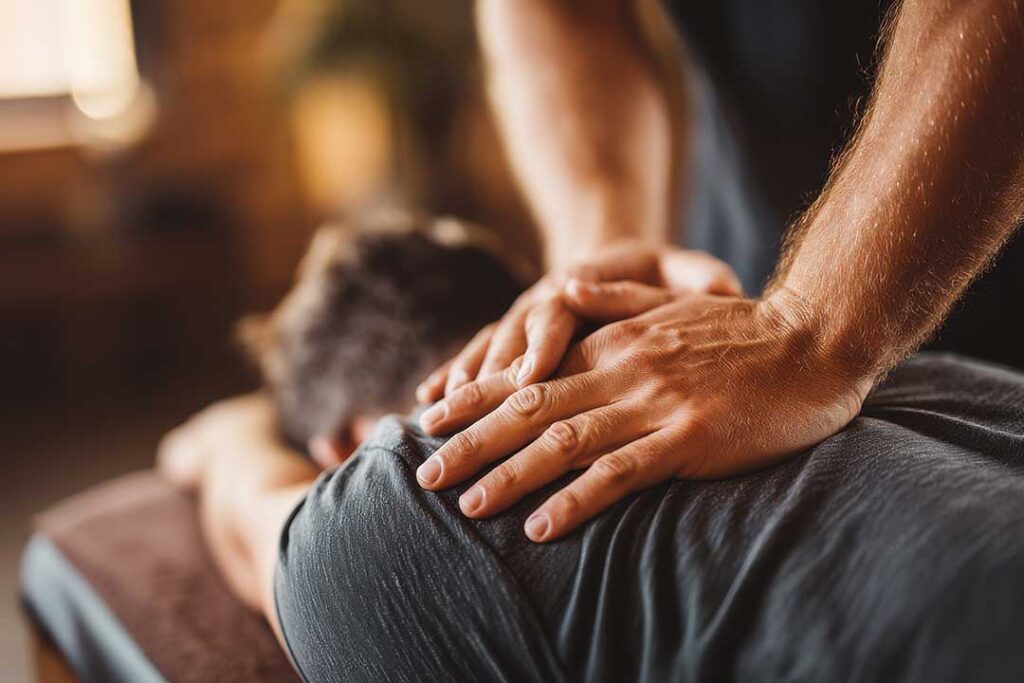
Scoliosis is a sideways curvature of the spine that may look like a “C” or “S” shape when viewed from behind. Chiropractic care may help some people manage related pain, stiffness, or movement limitations, but current evidence does not show that spinal adjustments can reliably straighten a scoliosis curve or prevent it from progressing.
For residents in Kingston, understanding that distinction can help families choose appropriate care and avoid delaying evaluation when a curve is changing or symptoms suggest a more serious problem.
What is scoliosis?
Scoliosis is more than a temporary postural habit. It involves a structural curve of the spine, often with some rotation of the vertebrae. In children and teenagers, the most common type is adolescent idiopathic scoliosis, meaning the precise cause is unknown. Family history may increase risk.
Possible signs include:
- One shoulder appearing higher than the other
- An uneven waistline
- One shoulder blade or side of the rib cage appearing more prominent
- One hip seeming higher than the other
- Clothing hanging unevenly
- A visible curve when bending forward
Mild scoliosis often causes no pain, particularly in children. A physical examination and, when appropriate, X-rays are used to confirm the diagnosis and measure the curve. Treatment decisions depend on the curve’s size and location, whether it is changing, the person’s age, skeletal growth, and symptoms. ([niams.nih.gov](https://www.niams.nih.gov/living-scoliosis?utm_source=openai))
Can chiropractic care correct scoliosis?
No reliable evidence shows that chiropractic adjustments permanently correct an idiopathic scoliosis curve. Chiropractic treatment may influence joint motion, muscle tension, and pain, but those effects are different from changing the structure of the spine.
The Scoliosis Research Society states that the treatments demonstrated to affect adolescent idiopathic scoliosis curves are bracing and surgery when clinically appropriate. Its patient information also notes that there is no current evidence that chiropractic care changes the curve itself. ([etext.srs.org](https://etext.srs.org/patients-and-families/common-questions-and-glossary/frequently-asked-questions/treatment-and-coping?utm_source=openai))
That does not mean chiropractic care has no possible role. A carefully selected treatment plan may address symptoms that occur alongside scoliosis, such as:
- Local muscle tightness
- Mild mechanical back pain
- Reduced spinal or hip mobility
- Strain related to prolonged sitting or standing
- Difficulty moving comfortably during work, exercise, or household tasks
The realistic goal is symptom management and improved function—not “putting the spine back into place” or guaranteeing that a curve will stop progressing.
What might a chiropractor do during an evaluation?
A responsible evaluation should begin with health history, symptom review, posture and movement assessment, and screening for signs that require medical referral. The clinician may ask about previous imaging, injuries, numbness, weakness, balance problems, bowel or bladder changes, and whether symptoms are worsening.
Treatment might include gentle mobilization, soft-tissue techniques, movement instruction, or an exercise program. Spinal manipulation is not the same as scoliosis treatment. Research supports spinal manipulation more clearly for some forms of low-back pain than for changing spinal curvature. Benefits for low-back pain tend to be modest, and temporary soreness or increased discomfort can occur. ([nccih.nih.gov](https://www.nccih.nih.gov/health/spinal-manipulation-what-you-need-to-know?utm_source=openai))
For a child or teenager, any chiropractic care should complement—not replace—appropriate pediatric, primary-care, orthopedic, or physical-therapy evaluation. Children require special consideration because a curve may progress during periods of growth.
Which scoliosis treatments have stronger evidence?
Treatment depends on the individual rather than on a single standard approach.
For a mild curve, especially in a growing child, observation may be recommended. Follow-up examinations help determine whether the curve is stable or increasing. Moderate curves in children who are still growing may be treated with bracing. The purpose of a brace is generally to slow progression, not to permanently make the spine perfectly straight. ([niams.nih.gov](https://www.niams.nih.gov/health-topics/scoliosis/diagnosis-treatment-and-steps-to-take?utm_source=openai))
Physical therapy may help improve strength, posture, body awareness, breathing mechanics, and daily function. Scoliosis-specific exercise approaches may be considered, although the strength of evidence varies by method and patient group.
Surgery is reserved for selected cases, often involving a severe or progressively worsening curve, significant imbalance, or other complications. Decisions about surgery require detailed imaging and discussion with a spinal specialist. Chiropractic care should not delay these evaluations.
Is chiropractic treatment safe for someone with scoliosis?
Safety depends on the person’s age, diagnosis, bone health, medications, symptoms, and the techniques used. Mild short-term soreness, stiffness, or headache can occur after spinal manipulation. Serious complications are rare, but they have been reported, and underlying health conditions may increase risk. ([nccih.nih.gov](https://www.nccih.nih.gov/health/spinal-manipulation-what-you-need-to-know?utm_source=openai))
Extra caution is appropriate for people with:
- Osteoporosis or significant bone weakness
- A recent fracture or major injury
- Cancer involving the spine
- Infection, fever, or unexplained weight loss
- Progressive neurological symptoms
- Severe or rapidly worsening pain
- A known spinal cord or nerve disorder
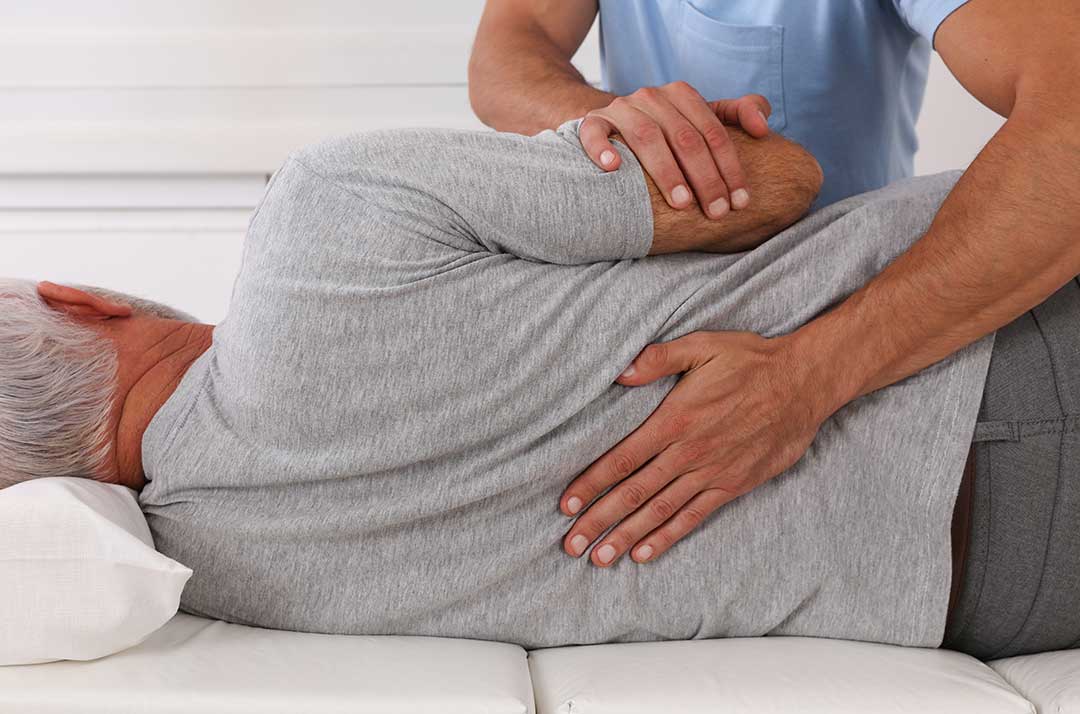
For children, the National Center for Complementary and Integrative Health notes that spinal manipulation has been associated with rare but serious complications. Parents should ask how the treatment will be adapted for a child and whether the provider is coordinating with the child’s medical team. ([nccih.nih.gov](https://www.nccih.nih.gov/health/children-and-the-use-of-complementary-health-approaches?utm_source=openai))
When should a Kingston resident seek medical evaluation first?
Back pain is not automatically caused by scoliosis. In children and teenagers, significant pain deserves attention because uncomplicated adolescent idiopathic scoliosis often causes little or no pain.
Prompt medical assessment is appropriate for:
- New weakness, numbness, or tingling
- Trouble walking, frequent falls, or loss of balance
- Loss of bowel or bladder control
- Severe nighttime pain
- Fever, unexplained weight loss, or unusual fatigue
- Pain after a fall, collision, or other injury
- Noticeable curve progression
- Shortness of breath associated with a severe curve
Seasonal conditions can also affect symptoms. Winter ice, snow removal, reduced outdoor activity, and more time sitting indoors may increase muscle stiffness or lead to strain. Those factors can aggravate discomfort without necessarily changing the scoliosis itself. Safe walking practices, gradual conditioning, supportive footwear, and avoiding sudden heavy lifting can be useful during colder months.
How can chiropractic care fit into a broader plan?
The most useful approach is coordinated care. A person with scoliosis may benefit from a combination of medical monitoring, physical therapy, appropriate exercise, pain-management strategies, and—when indicated—bracing or surgery.
Before beginning treatment, ask:
- Is the curve confirmed with appropriate evaluation?
- What is the goal: pain relief, mobility, strength, or curve control?
- How will progress be measured?
- What symptoms would require referral?
- Is the plan appropriate for a growing child?
- Will treatment be coordinated with the person’s physician or physical therapist?
The clearest answer is that chiropractic care may help manage some discomfort and movement problems associated with scoliosis, but it should not be presented as a proven method for correcting the curve. Monitoring, evidence-based treatment, and timely referral remain central to safe scoliosis care.
